
Whole food nutrition
Protein Maxing and the Rest of Your Plate
Why adding protein doesn’t automatically make a food a better choice
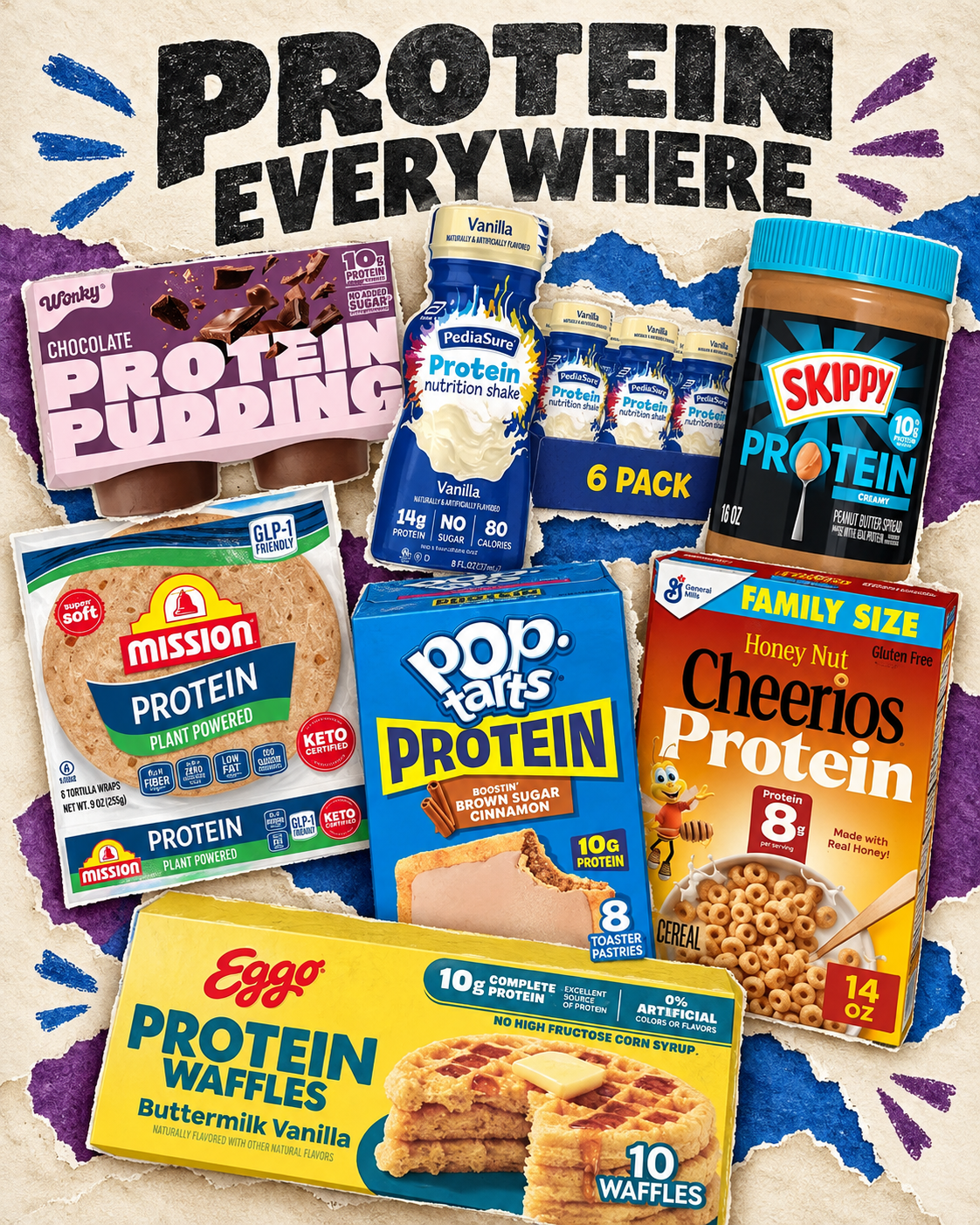
You can put protein powder on popcorn. You’ll have popcorn with more protein. That doesn’t automatically make it a better choice.
Just because you add protein powder to something doesn’t automatically make it better for you. It adds protein, but it doesn’t take away any added sugar, sodium, or saturated fat already there. A higher protein number is only one part of the picture.
I care about protein because it matters to the strength we want to keep after 60. I also want to look at the whole foods and the rest of the meal.
What protein maxing means
Protein maxing, often written protein maxxing online, has no single scientific definition. The term generally describes pushing protein intake higher, sometimes by adding it to foods that weren’t traditionally thought of as protein foods. At its most extreme, the number becomes the goal.
The interest is widespread. In its 2026 Food and Health Survey, released October 7, the International Food Information Council reported that 70% of Americans actively try to include protein in their diets. That measures consumer interest. It doesn’t tell us whether their meals are balanced or whether adding more protein improved their health.
What a protein claim leaves out
A protein number tells you about protein. To understand the rest, look at the serving size, calories, fiber, added sugars, sodium, and saturated fat, along with the ingredients.
And what kind of protein are they adding? Where does it come from?
Whey and casein are milk proteins. Other products use proteins from plants, including soy and peas. The ingredient list helps answer that question. That matters if you have a food allergy or avoid certain ingredients.
Even the products in this collage use different sources. Skippy’s protein peanut butter adds pea protein. Eggo’s Buttermilk Vanilla Protein Waffles list soy protein isolate and whey protein concentrate.
I want to know what I’m eating, where the protein comes from, and what else comes with it. The number on the front is only the beginning.
The FDA’s updated criteria for the voluntary healthy claim on food labels take a broader view. They consider qualifying amounts from food groups as well as limits on added sugars, sodium, and saturated fat. Protein grams alone aren’t the test.
Popcorn can fit into a balanced eating pattern. A cookie can still be something you enjoy. Neither needs a protein claim to earn a place in your life. We just need to be clear about what we’re eating and what it contributes.
Protein still matters after 60
Getting enough protein helps support the maintenance and repair of muscle. Older adults’ needs deserve attention, especially when appetite is low, activity changes, or illness affects eating. Clinical guidance emphasizes adjusting protein to the person and providing enough overall food energy too.
That’s different from assuming every extra scoop produces extra strength. A 2025 overview of 33 research reviews found that the effects of protein supplements varied by health status and whether exercise was included. It didn’t support routinely adding supplements for every healthy older adult.
That finding isn’t a reason to ignore your protein needs. It’s a reason to ask whether a supplement fills a gap. Strength also needs appropriate training and recovery. A higher number on a food label can’t stand in for those habits.
How I build a meal
When I say protein forward, I mean giving protein a deliberate place in a meal while paying attention to what the meal needs to do for you. Breakfast after an early workout has a job. So does lunch when you have several hours of work ahead.
Healthy eating involves a pattern of foods that supply different nutrients. One ingredient can’t cover every need.
| When the protein number takes over | How I approach the meal |
|---|---|
| Keep increasing the protein total | Meet protein needs and consider the whole meal |
| Choose by the claim on the package | Consider the full label and what else you’re eating |
| Add powder automatically | Use it when it solves a practical need |
| Judge success by the grams | Build meals that nourish you and fit your life |
For breakfast, that might be mini quiches with eggs, egg whites, turkey, mushrooms, and onion, with fruit or oatmeal according to your appetite and the morning ahead. For dinner, it could be salmon with broccoli and a sweet potato, or pork loin with roasted squash and cabbage.
Lentils can contribute protein and fiber to a vegetable soup. Leftover pork can become tomorrow’s lunch with greens and roasted vegetables. You can change the seasoning or use what’s already in the refrigerator. You don’t need a separate recipe for every meal.
These meals give us more to consider than a protein total. They offer different foods, enough substance to eat as a meal, and a practical way to get dinner on the table.
Where protein powder can help
Protein powder can be useful when it helps you meet a need. You might add it to oatmeal, or use it in a smoothie with fruit and other ingredients that make the meal work for you. A convenient option can help on a busy day or when your appetite makes it difficult to eat enough.
Check how it fits your overall intake, what you tolerate, and whether you enjoy it. If you have kidney disease or a prescribed protein limit, work with your clinician or registered dietitian before making a substantial change. Protein advice needs to fit your health.
Convenience belongs in this conversation too. Frozen vegetables, canned fish, and canned lentils can help you make a nourishing meal with less work. A package isn’t a verdict on a food. Look at what’s inside and how you use it.
Before you buy the next protein product
- Check the full label for the portion you’ll actually eat. The protein number is one piece of information.
- Ask what need it meets. Does it help you get enough protein, make a meal easier, or simply appeal to you as a snack?
- Consider the rest of your day. Keep room for vegetables, fruit, other foods that provide fiber, and enough energy for your activities.
- Be honest about the role. Calling it high protein doesn’t make it complete.
Give the whole meal a job to do
For the women I write for, strength means being able to take part in life. Climbing the stairs. Working in the yard. Keeping up with family plans. I want the food we make to support that life.
So yes, pay attention to protein. Then look at what else you’re giving yourself. The goal isn’t to eat as little as possible. It’s to build a plate that does more for you.
When you see high protein on a package, what else do you look for before buying it?